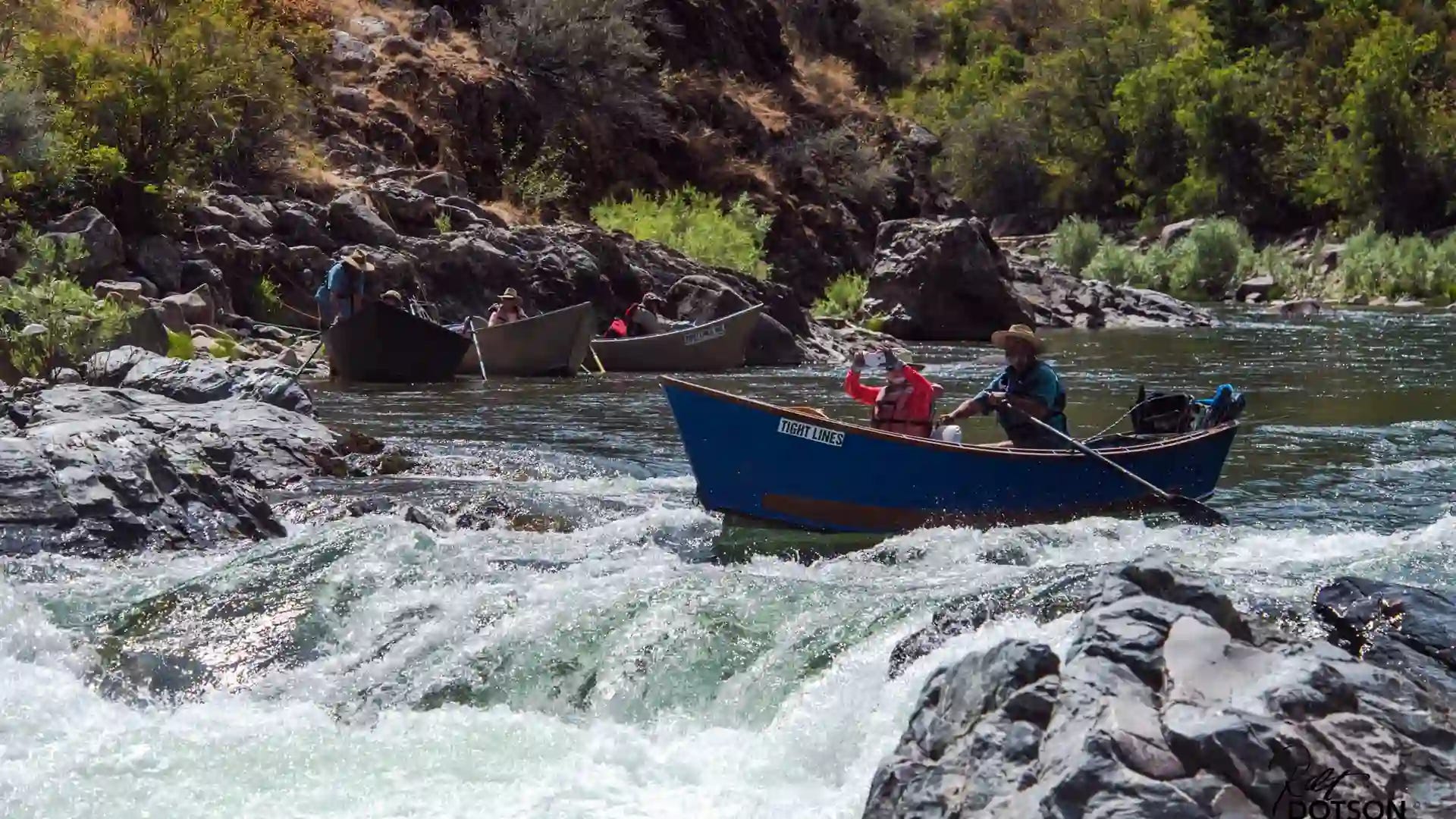
Idaho, Salmon River, Middle Fork.
To book or for more information please call, (434)760-3474

Middle Fork of the Salmon River
To book please call, (434)-760-3474
Fly Fishing and Whitewater
Fish 100 miles of Idaho’s legendary Middle Fork of the Salmon River, a fly-fishing-only destination. This multi-night float trip features 32 named rapids, including exciting Class III and IV whitewater, all while drifting through some of the most spectacular and rugged country in the Lower 48. Trips run from July through September by drift boat or raft.
2026 Rate: $4,050.00 for 5-nights and 6-days guided driftboat fishing.
The Middle Fork of the Salmon
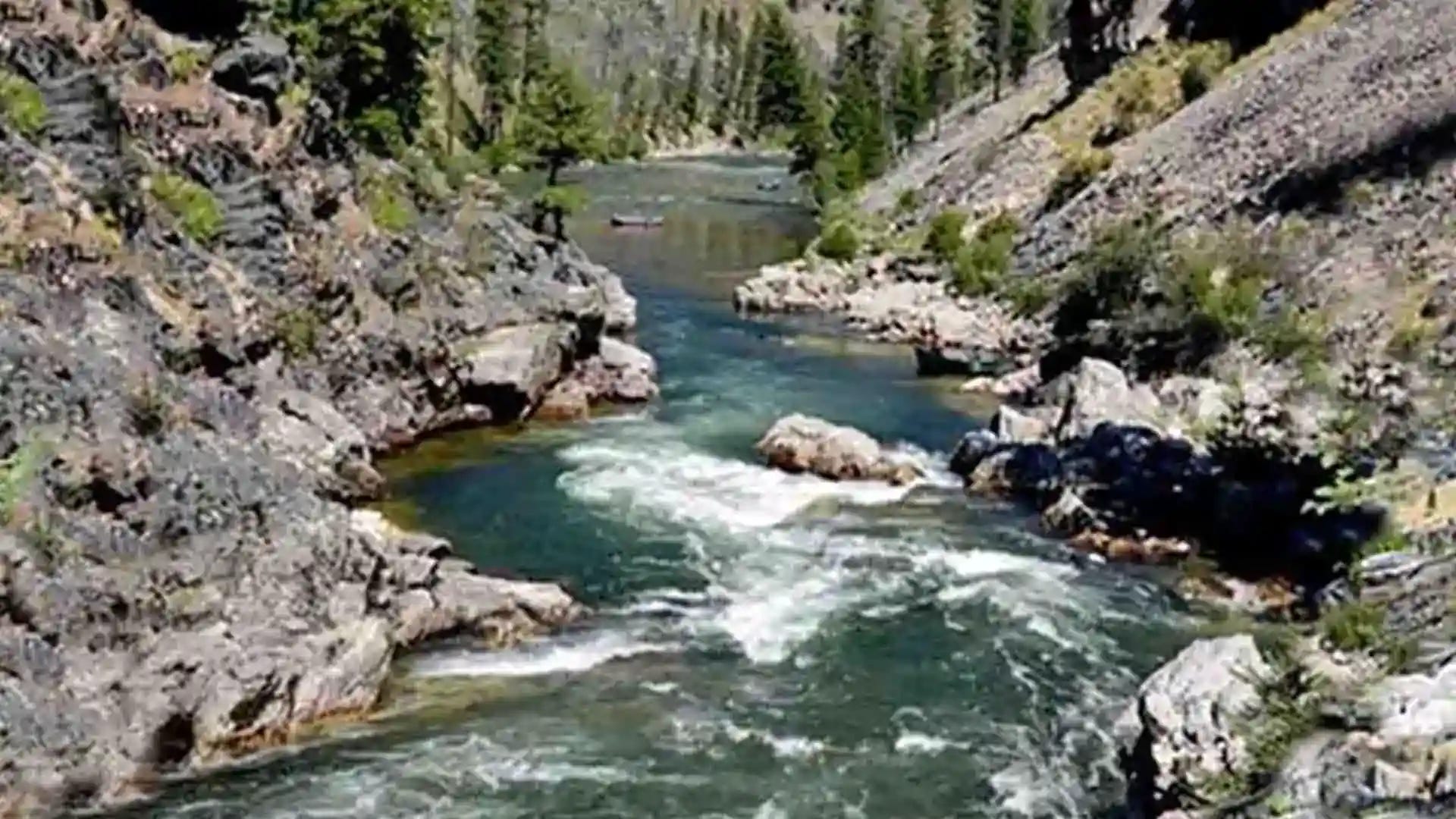
The Middle Fork of the Salmon flows through the heart of Idaho’s Frank-Church Wilderness and the Sawtooth Mountains, some of the most secluded and rugged country in the lower 48. Renowned as one of the Northwest’s premier dry fly fisheries, the river has been managed as catch-and-release since 1973 and offers both steady surface action and impressive numbers of native cutthroat trout.
This multi-day float trip combines world-class fishing with breathtaking scenery, abundant wildlife, and exhilarating Class III–IV whitewater. Carving directly through the Frank Church Wilderness, the Middle Fork delivers not just a fishing experience, but an unforgettable wilderness adventure.
On this trip, you’ll fully disconnect. Once you launch, there is no Wi-Fi and no cell service within the Middle Fork’s 2.3 million acres of wilderness. A satellite phone is available for emergencies only. At camp, there are no generators—just the sound of the river and surrounding wildlife.
Special Permit: To operate these trips, the outfitter has a special-use permit from the Salmon-Challis National Forest.
Fly Fishing - Drift Boat and Rafting
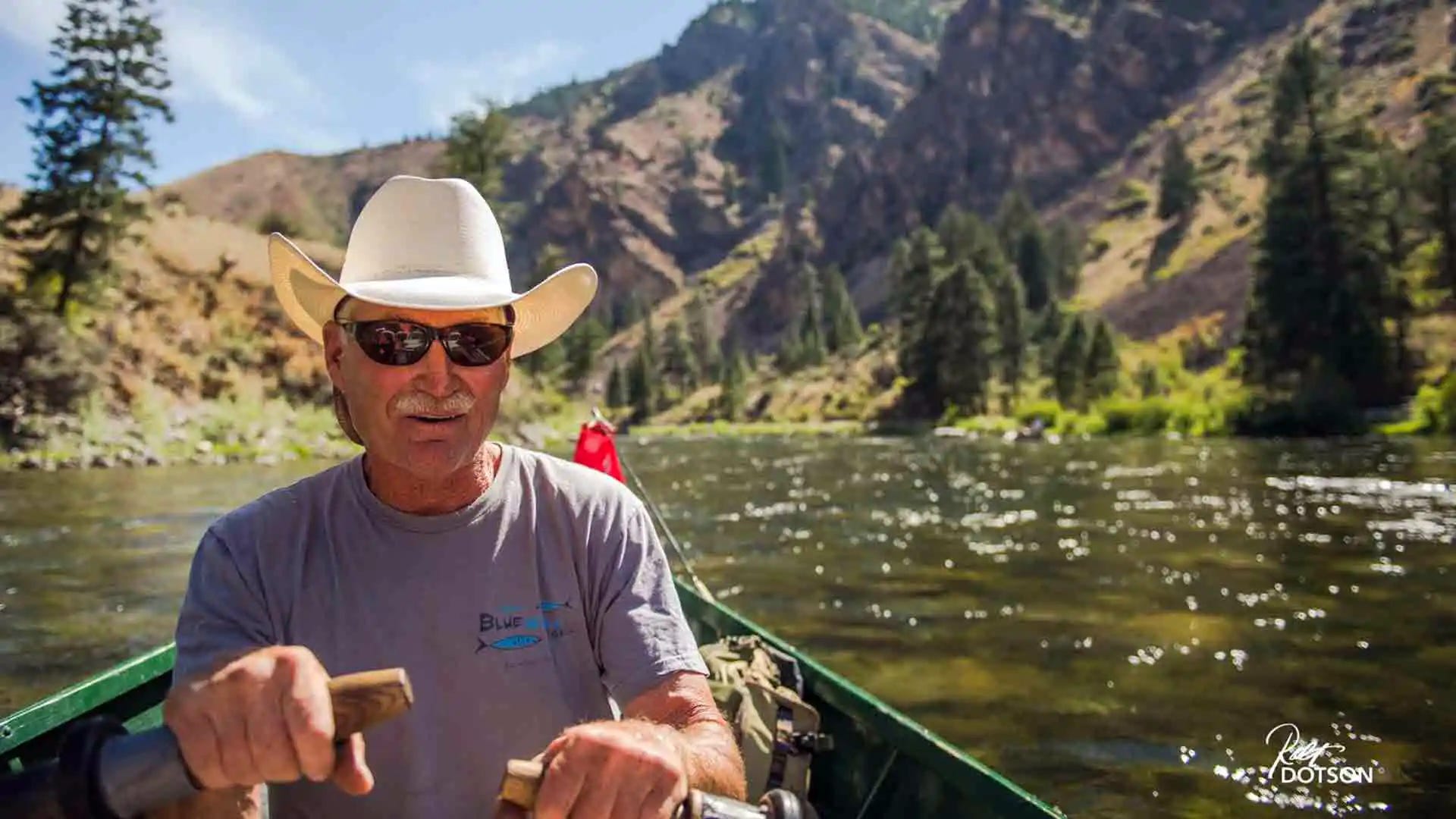
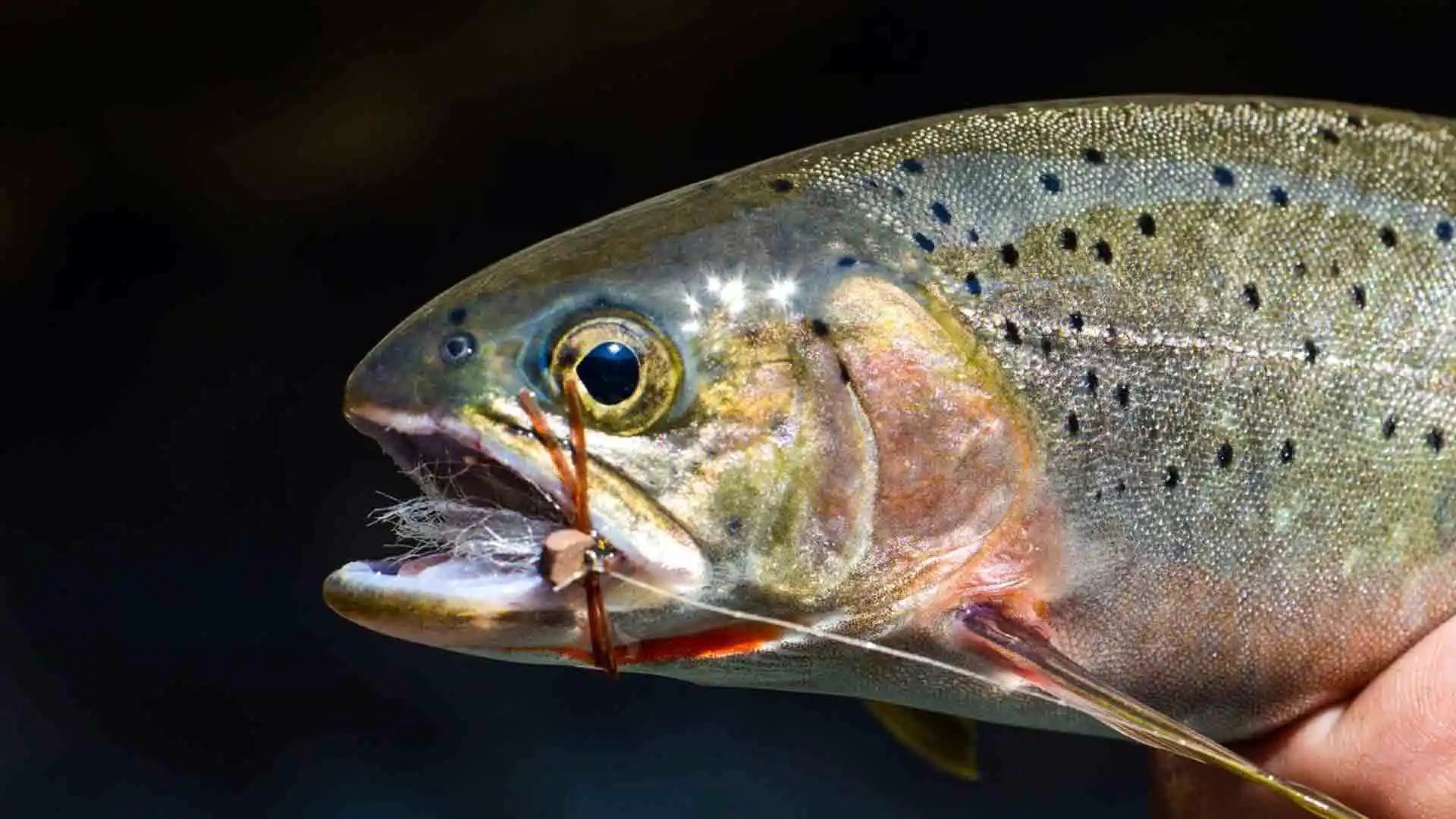
Dry fly fish for native West-slope cutthroat, a few native rainbows, and the occasional bull trout. Cutthroat average 8 to 15 inches, with some up to 20. Numerous feeder creeks provide excellent pocket water for fishing for cutthroat and native redside rainbows.
This is a catch-and-release only fishery, managed that way since 1973, which has made the Middle Fork one of the Northwest’s best rivers for both numbers of fish and consistent action on a dry fly.
Guides: Whether you’re new to fly fishing or a seasoned angler, you’ll be in good hands—guides are patient instructors and specialize in both dry fly fishing and teaching the art of casting.
The class three and four rapids, abundant wildlife, and typically crystal-clear waters make this one of most treasured multi-night camping float trips available anywhere in the western U.S. This fishery has been managed by the state of Idaho as a catch-and-release fishery since 1973, making it one of the best fisheries in the northwest for both numbers of fish and consistently good action on a dry fly.
Cast-and-Blast options run from September through October on the main Salmon River. Read below for more information.
Two Anglers per Guide and Drift Boat
Season: Trips run from mid-June through mid-September. Fishing is typically best late summer (late August and September) when flows are lower and trout are actively feeding before winter. All fishing is catch-and-release only for the river’s Westslope Cutthroat Trout, and single barbless hooks are required.
Only One Angler may Fish at a Time.
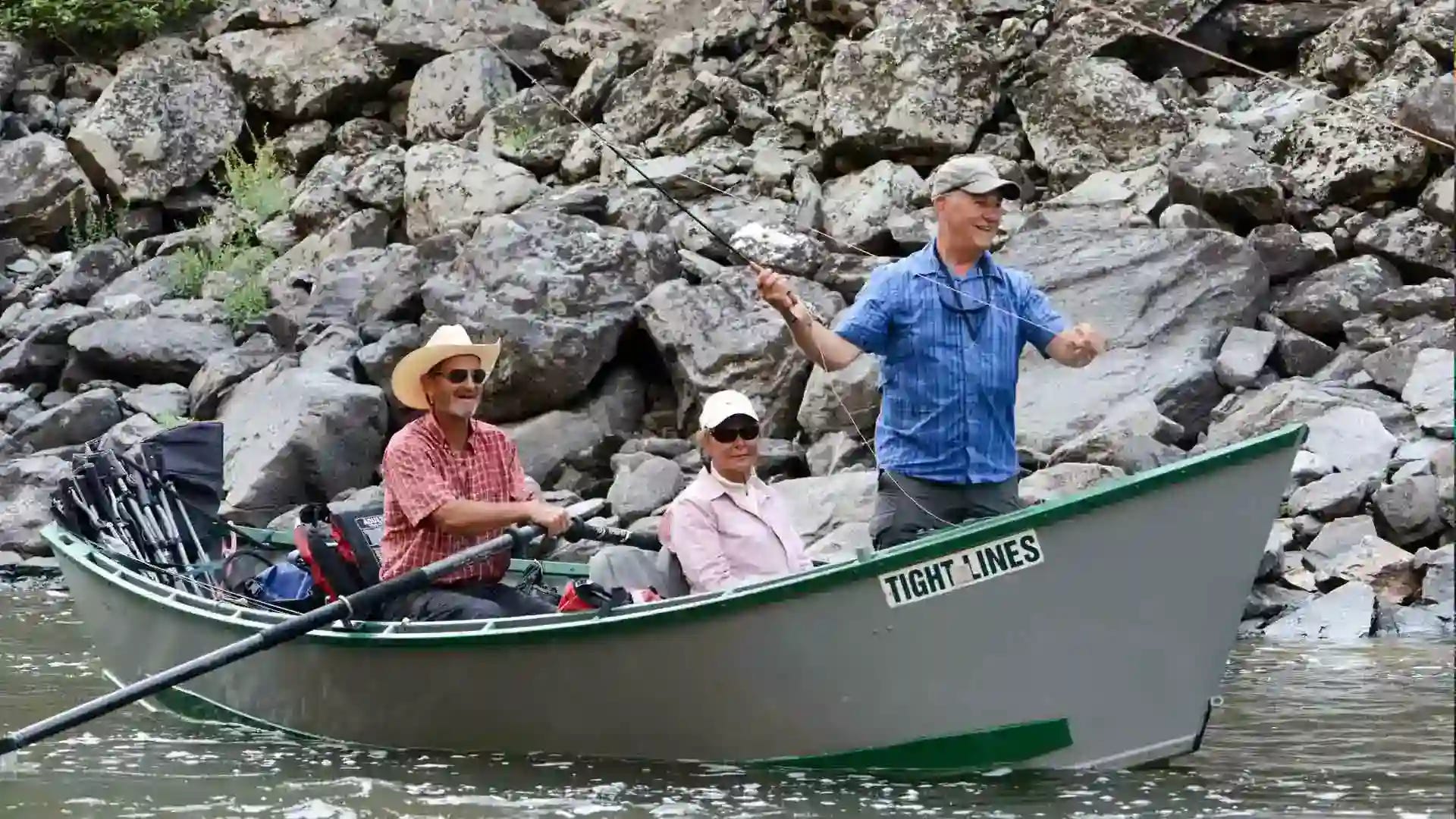
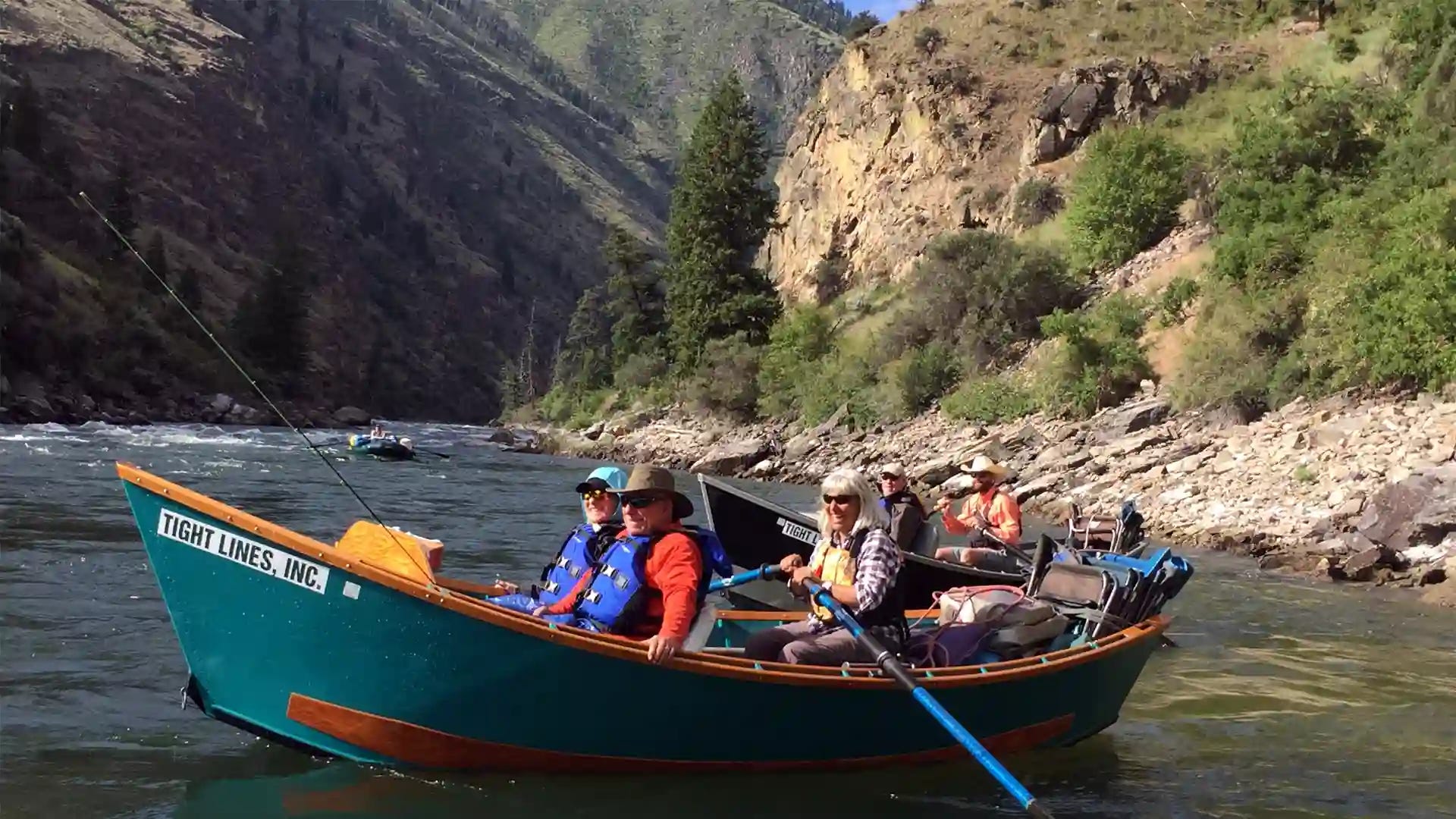
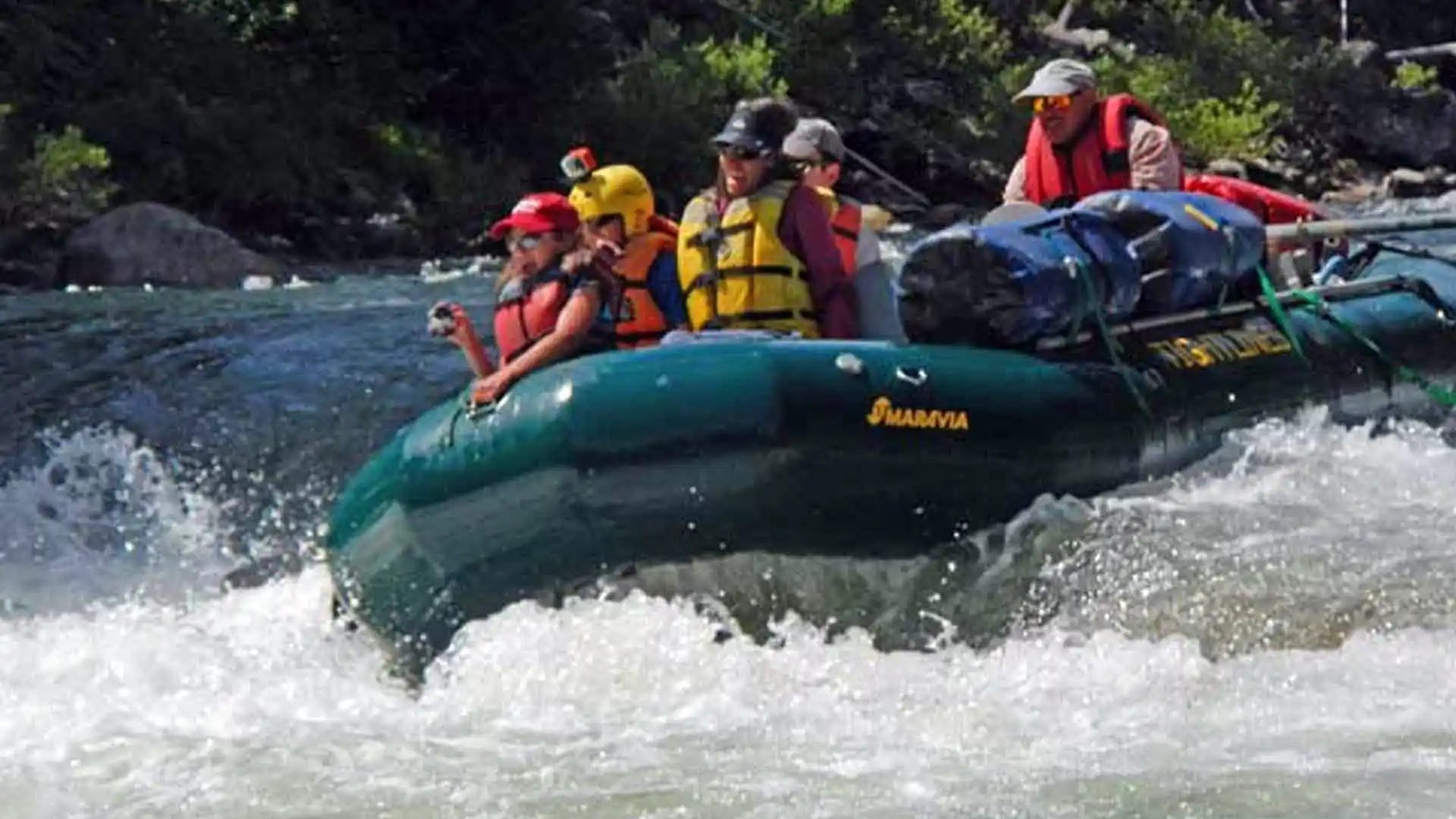
Boats: On a typical trip, you’ll float for roughly 100 miles through an ancient granite rock canyon utilizing a classic McKenzie-style drift boat or 14 to 17-foot high-end rafts. Two anglers per guide and boat/raft. Only one angler may fish in the boat at a time. (For safety reasons, only one angler may stand in the boat at a time.) All boats are equipped with seat cushions with backs, a splash tarp, life jackets, and coolers stocked with cold beverages.
In July, rafts are often difficult to stop and cannot fish the small pockets that a drift boat can.
32 Named Class Rapids - Tappan Falls
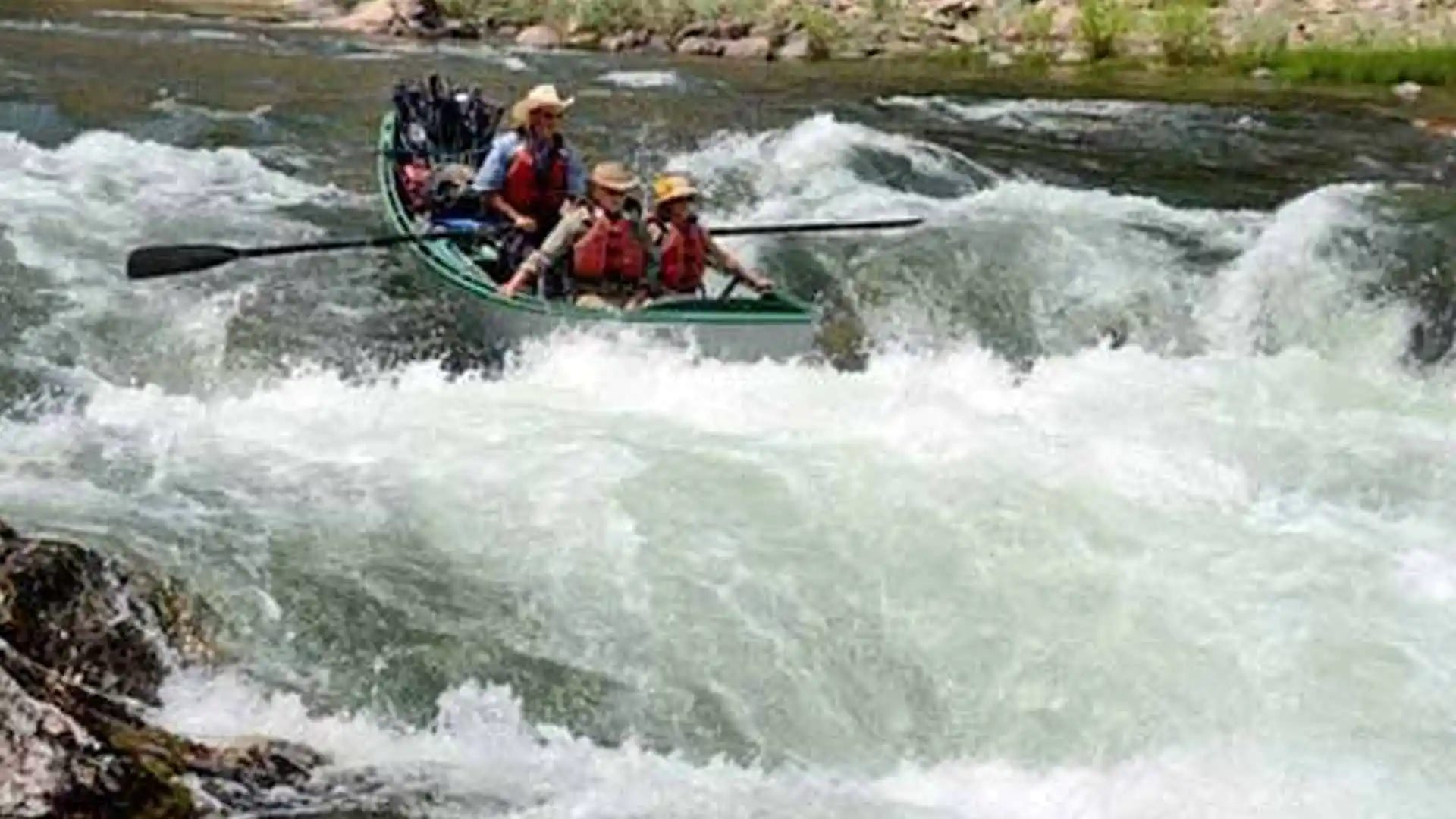
A Typical Fishing Day:
8:30 a.m. - You’ll have breakfast. Then, you’ll put on your life vest and head out with your guide, drifting and fishing 15 to 20 miles each day. Each boat will have a cooler containing ice, water, and beverages.
Midday - Guides prepare lunch along the river.
8:00 p.m. - A gourmet dinner is served each evening.
(7:30 p.m. during the fall.)
Fly Fishing at Big Creek
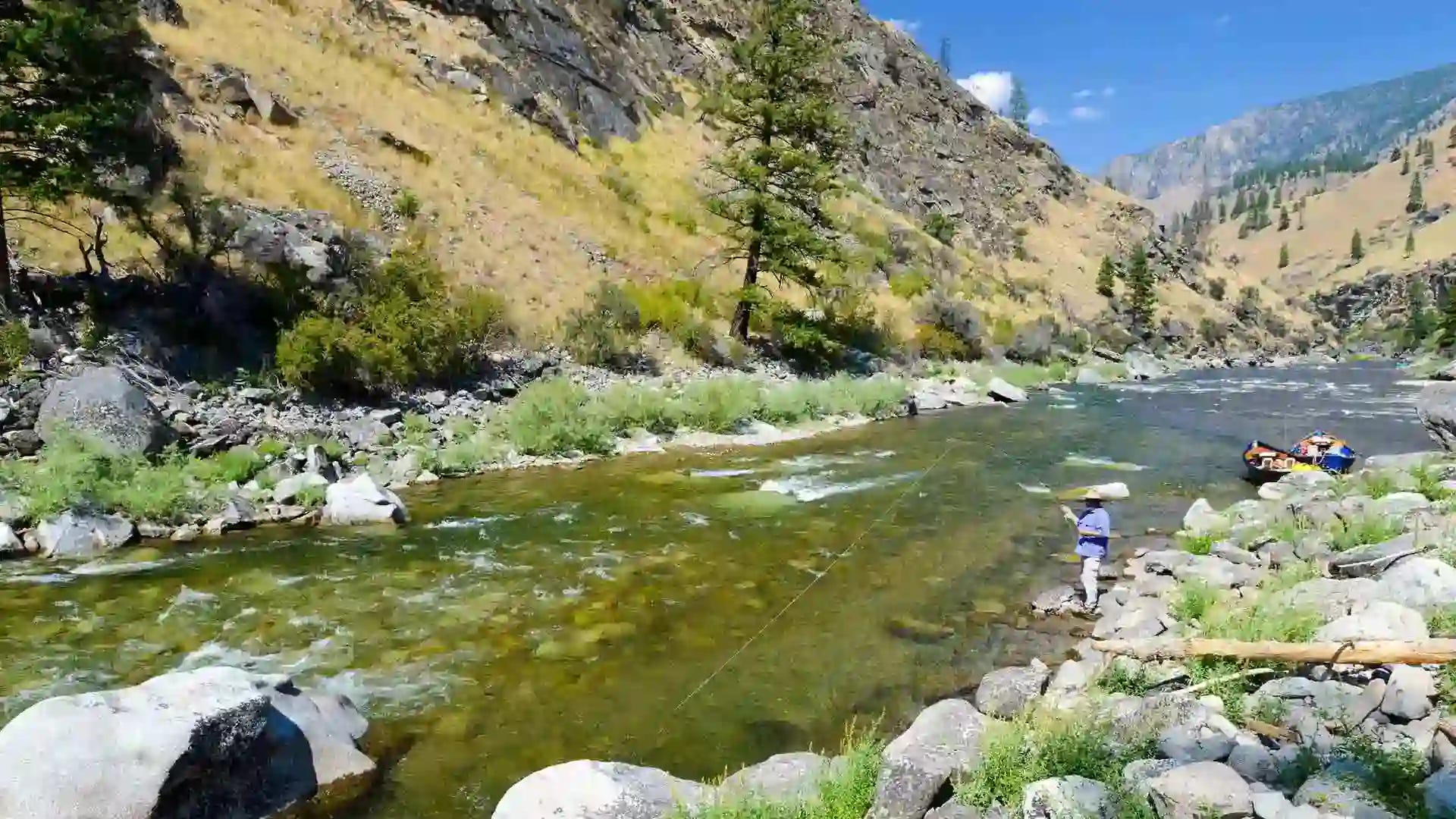
Guides: Licensed and experienced guides provide patient fly-casting instruction for novices and offer helpful tips for more experienced anglers.
Fishing Equipment: Each guide will supply the necessary fly fishing equipment. In the event of breakage, a $75 replacement fee applies. You are welcome to bring your own.
They exclusively use dry flies such as caddis, stimulators, para-Adams, or sofa pillows in the size 8-12 range. Many other dry flies are also effective. Guides provide floatant for your fly.
Fishing License: A 6-day non-resident Idaho fishing license runs about $57.75 (2024) and is not included in the package.
West-Slope Cutthroat
High-End Rafts
Riverside Camping
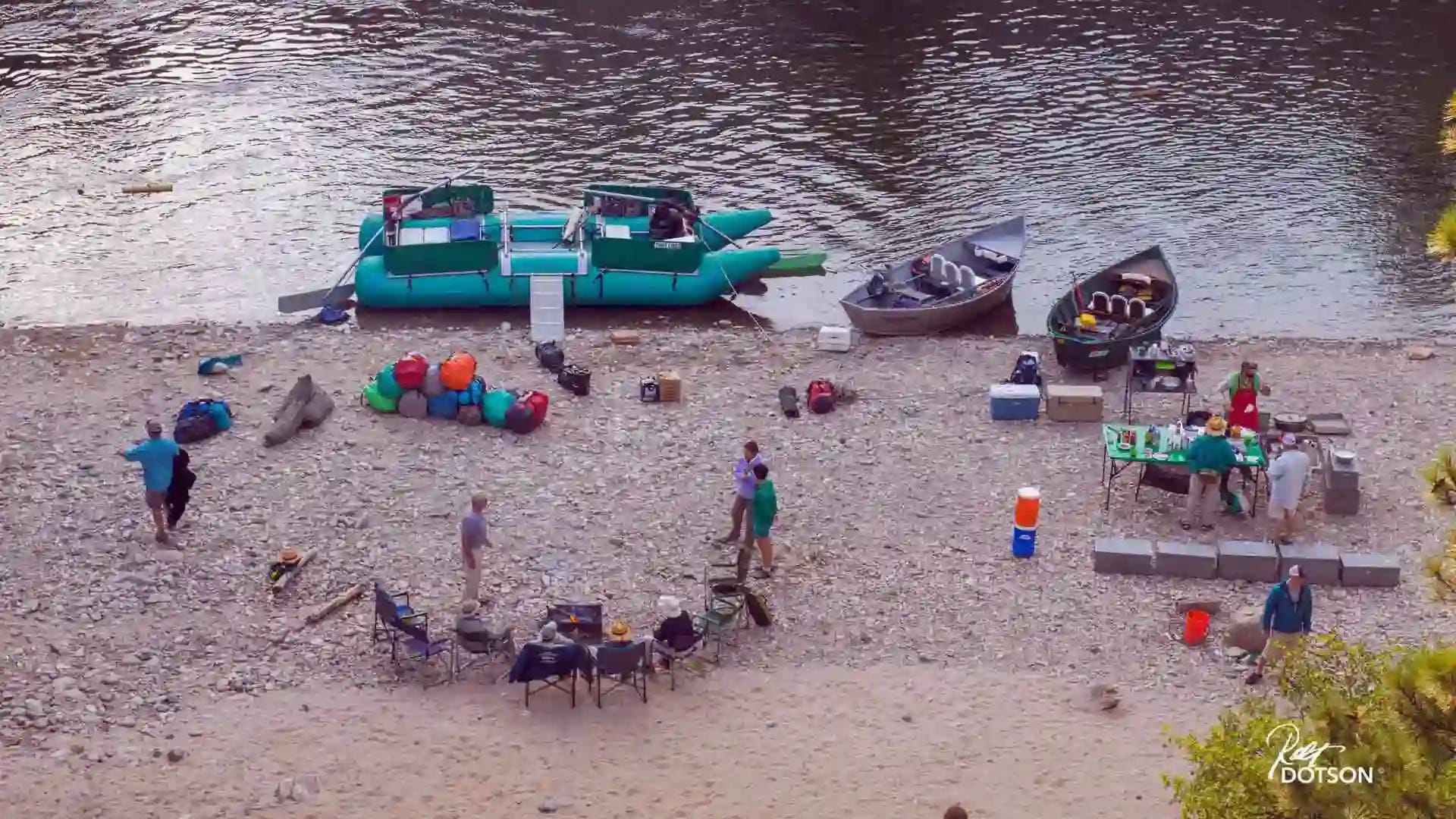
The camp staff set up tents at the site before you arrive each evening. You’ll need to carry your waterproof bag to your tent for the night. Two people per four-person tent, two cots, and two comfortable self-inflating pads. You will need to bring a sleeping bag. There is a cooking area, a dining area with folding chairs arranged around long tables, and a his and hers port-a-potty setup within a comfortable walking distance from camp. A hot shower on two evenings of the trip. Biodegradable soap is preferred, and no soap should be used directly in the natural hot springs or the river.
Sit-down Meals. Wine is Served with Dinner.
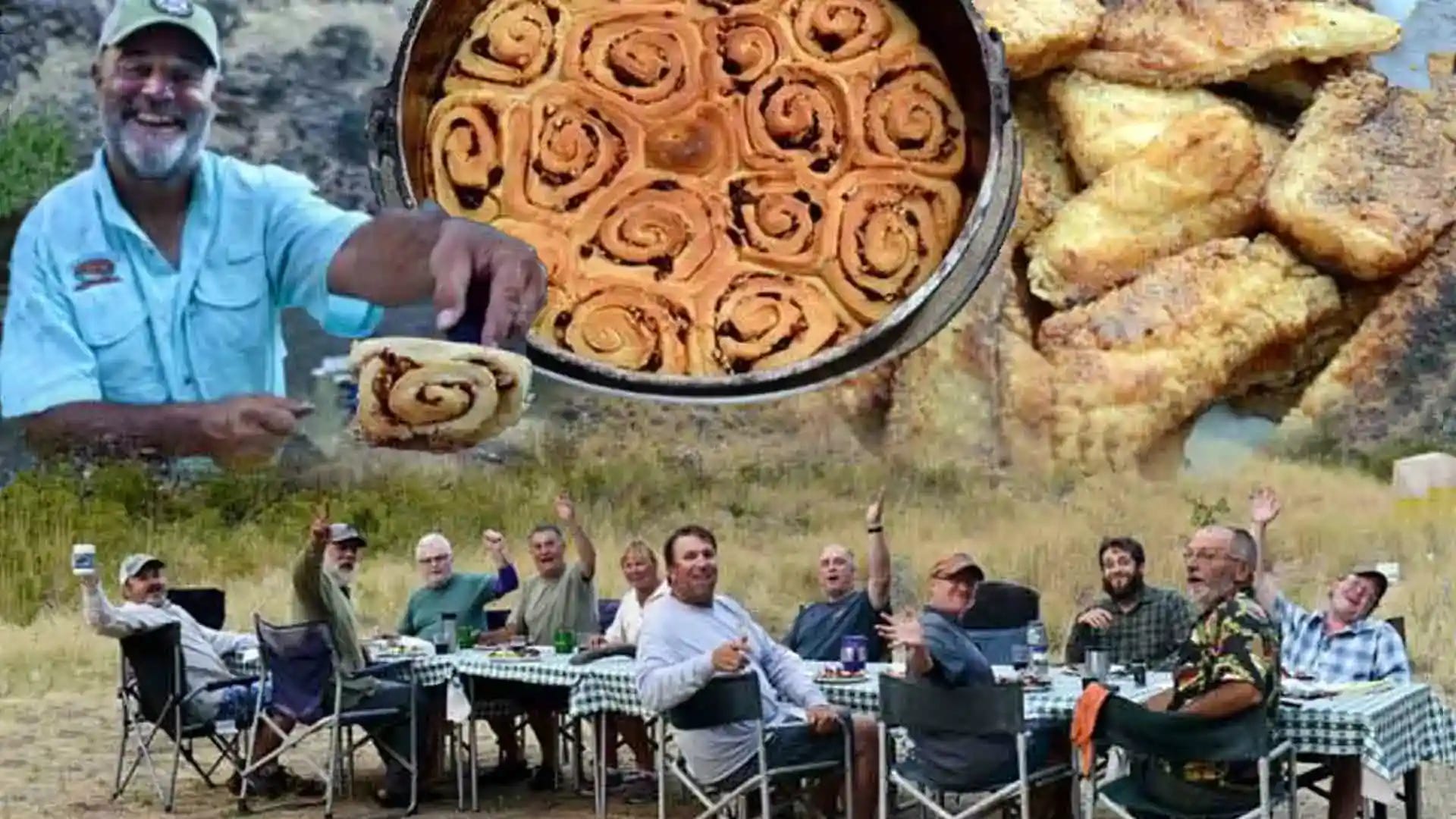
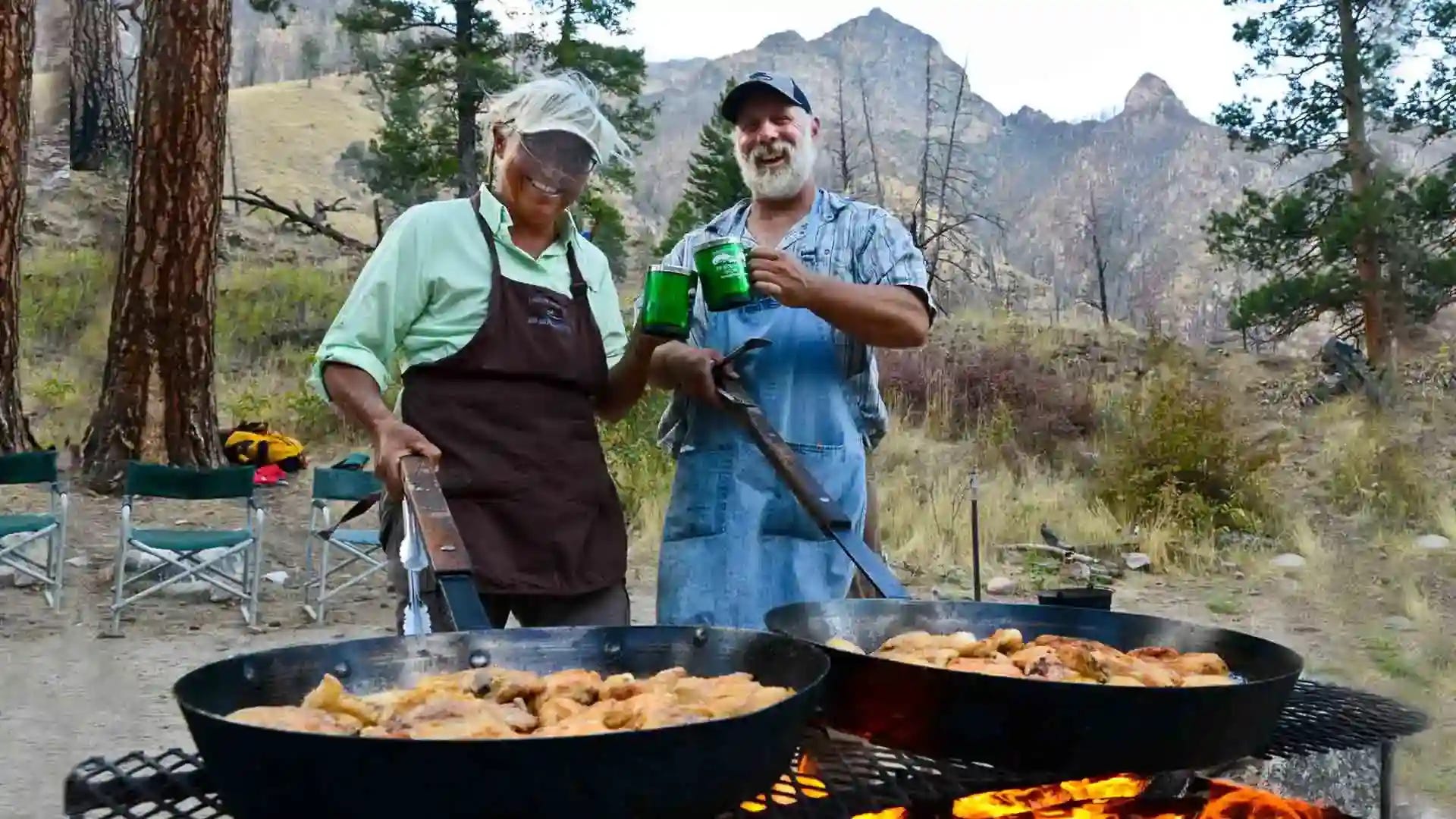
Meals: The guides and camp crew are experts in Dutch oven cookery and open-fire cooking. Garden-fresh salads, tasty desserts, and Dutch oven specialties. Fresh supplies, ice, and beverages are flown to the halfway point. The outfitter accommodates special beverage requests and dietary restrictions.
Alcohol: Red wine is served with dinner, and each adult camper is limited to a few cold beers each evening.
Meal Times: Breakfast at 8:30 a.m. Lunch mid-day on the river. Dinner at 7:30 p.m.
Communications: A satellite phone is available for emergencies only. Surrounded by 2.3 million acres of wilderness, no cell service is available, and no generators are in camp.
For more information and pricing, CLICK HERE.
Great Cooking in the Great Outdoors
Flyfishing for Cutthroat Trout
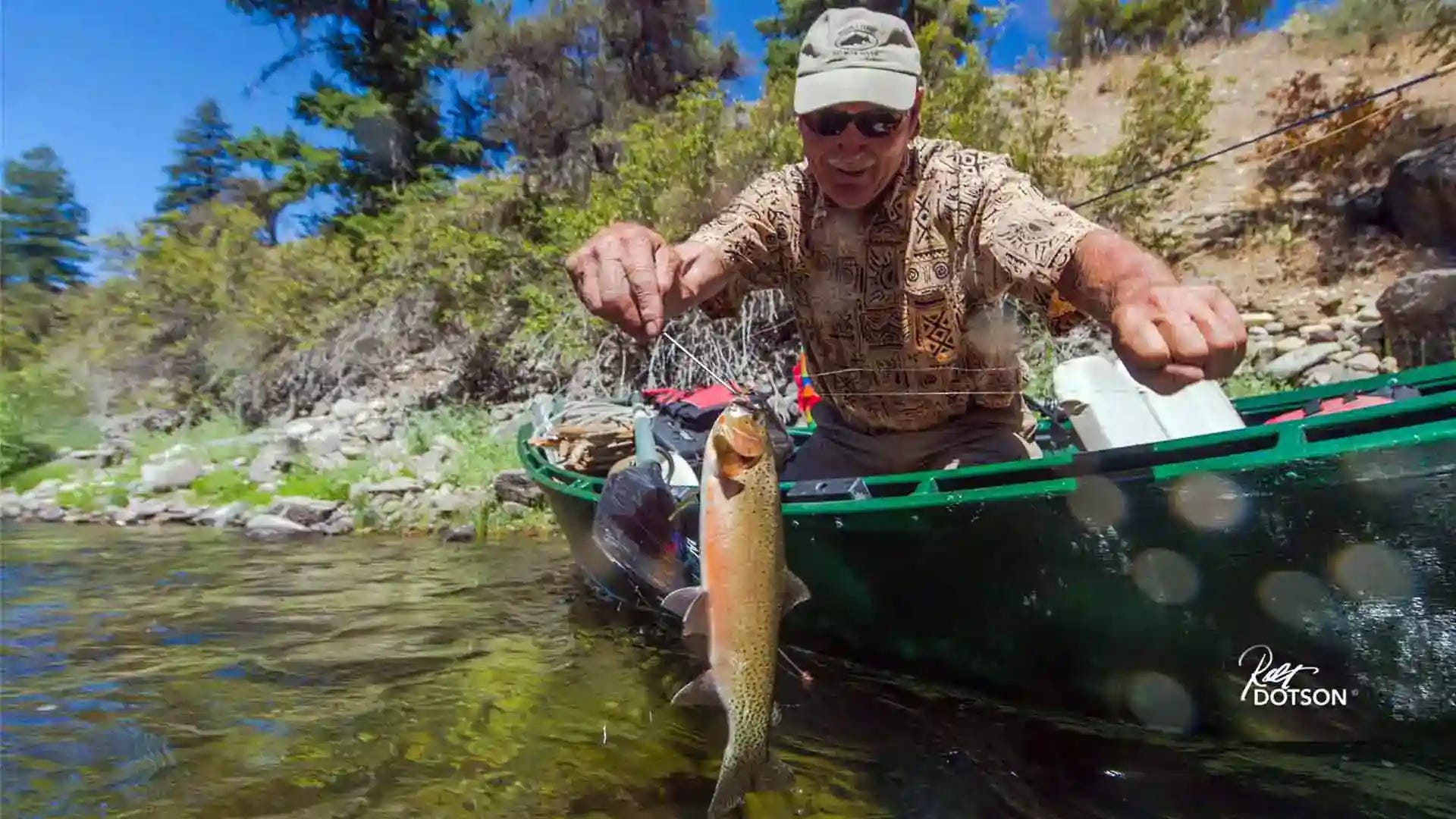
Middle Fork of the Salmon River