African Waters, Tigerfishing Safari
Mnyera and Ruhudji Rivers Combo, Fly Fishing Combo - Two Rivers and Two Camps
Tanzania
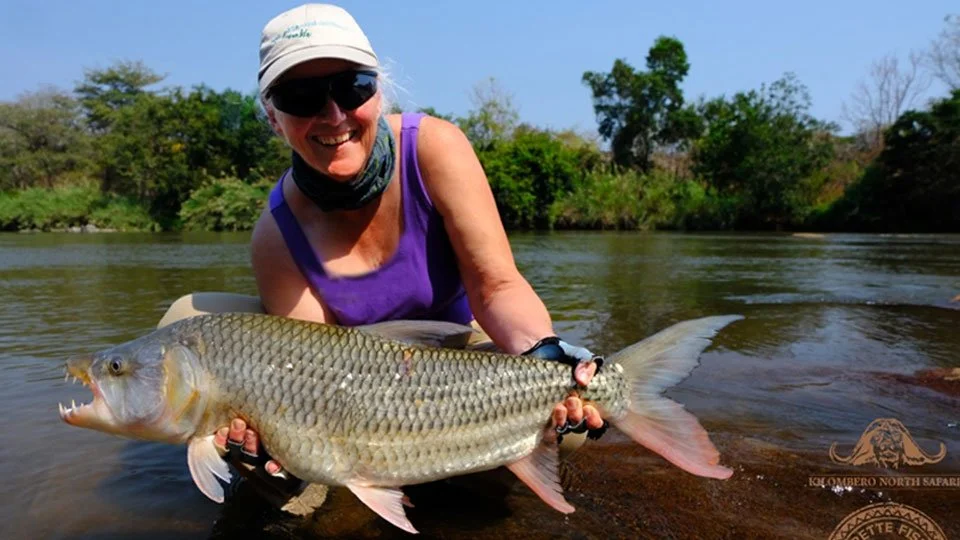
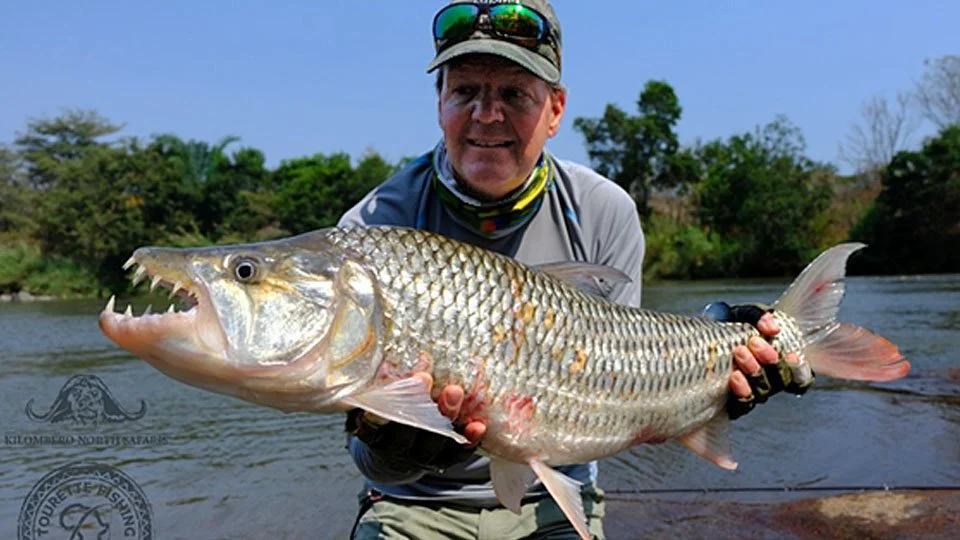
Fish for trophy tigerfish up to 28 pounds on Tanzania’s Mnyera and Ruhudji Rivers, famous for fast, strong, and aggressive tigerfish. These remote rivers flow through one of the world’s last true wilderness areas, offering anglers over 120 km (75 miles) of pristine water and 7 km (4.35 miles) of rapids.
Dhala Camp on the Mnyera and Samaki Camp on the Ruhudji provide the ultimate fly fishing safari experience. African Waters operates Tourette’s Tigerfishing Camps, offering exclusive access for a maximum of eight anglers per week. Enjoy three full days on each river in this untouched African wilderness, targeting tigerfish that consistently exceed traditional trophy benchmarks.
-
Expert Tigerfish Guides
Our safari is staffed by international, English-speaking guides with thousands of days’ experience on the Mnyera and Ruhudji Rivers. They are recognized as industry leaders in tigerfish fly fishing, with unmatched knowledge of the rivers, fish behavior, tackle, and proven techniques for landing trophy tigerfish.
Guiding Expertise & Approach
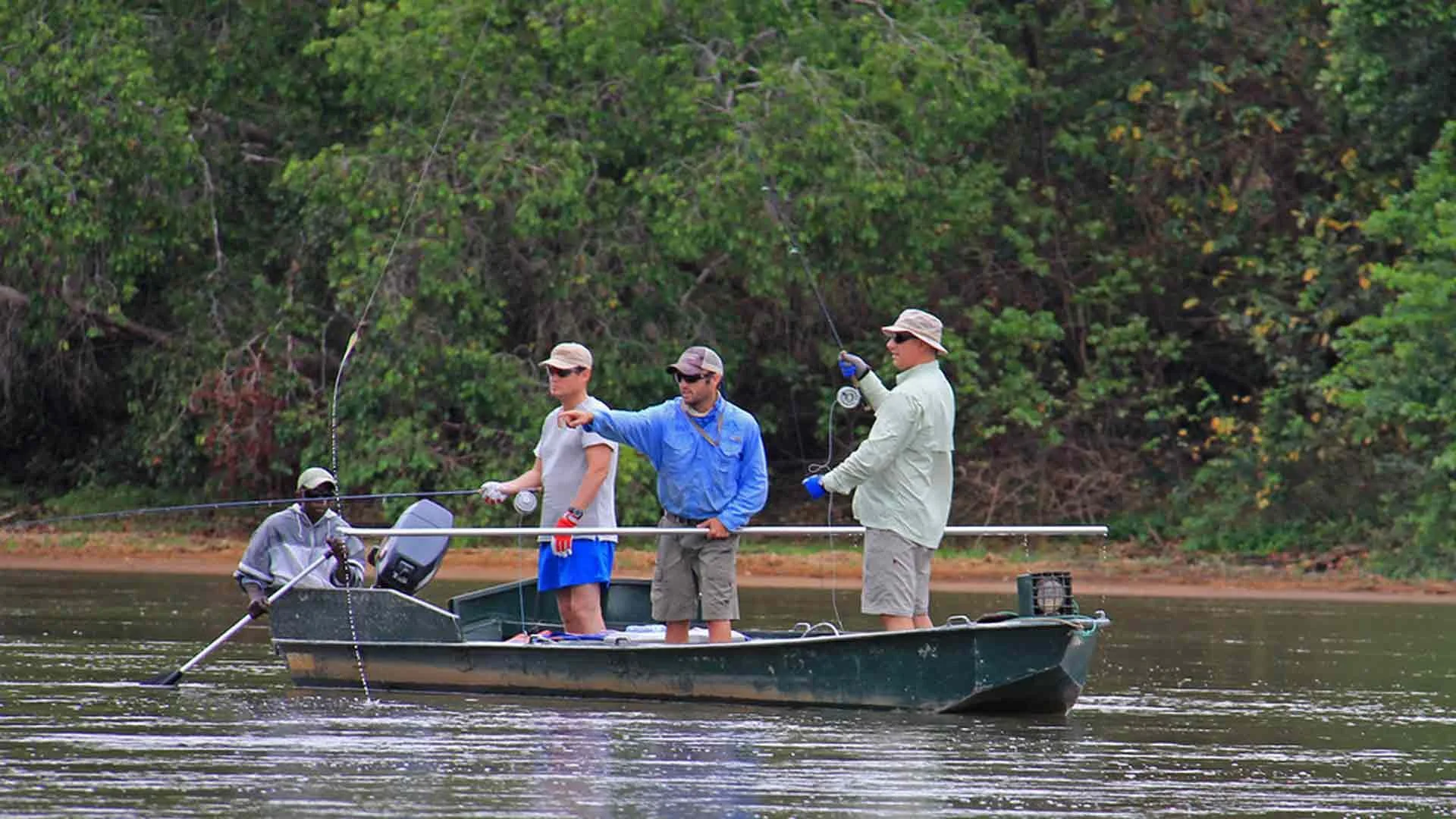
Guides ensure anglers are positioned on the fish, reading river conditions and selecting the best structure for each cast. They are skilled in a variety of techniques—from drifting to anchoring on prime water—and have identified over 30 fish species across the rivers.
Many guides also bring backgrounds in outdoor adventure and conservation, combining river ecology insights with fish behavior expertise to maximize every angler’s success while protecting these pristine waters.
-
Fly Fishing Only for Tigerfish
The Mnyera and Ruhudji Rivers safari is fly fishing only to deliver the ultimate tigerfish experience. Fly fishing allows precise presentations to trigger strikes from fast, aerial tigerfish, ensures catch-and-release conservation, and preserves the pristine wilderness of these remote Tanzanian rivers. It’s the most challenging and rewarding way to land trophy tigerfish.
-
Primary Target
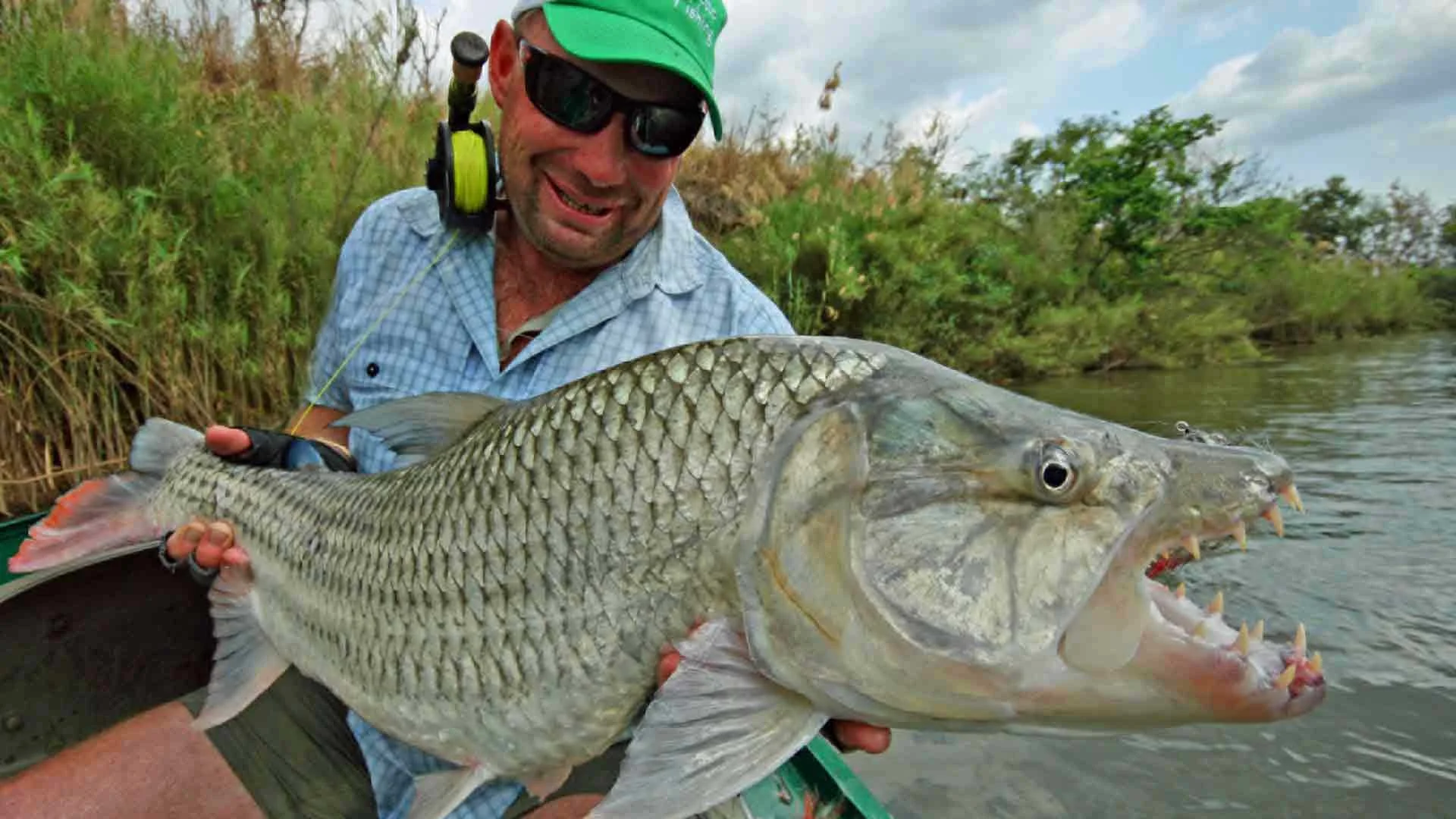
Tigerfish (Hydrocynus vittatus) – The safari’s star species. Known for incredible speed, aerial acrobatics, and aggression. Trophy fish range from 10 to 28 pounds, with most averaging just under 8 pounds.
Other Notable Species
Vundu Catfish (Heterobranchus longifilis) – Africa’s largest freshwater catfish, sometimes exceeding 100 pounds; prized for challenging fights on a fly rod.
African Sharptooth Catfish (Clarias gariepinus) – Powerful river catfish, excellent for fly anglers seeking heavy-action fish.
Freshwater Bream (Tilapia species) – Common in slower river sections; provide additional fly fishing action.
Other River Fish – Including small predators and baitfish that form part of the tigerfish diet, adding variety to the fly fishing experience.
-
Dhala Camp – Mnyera River
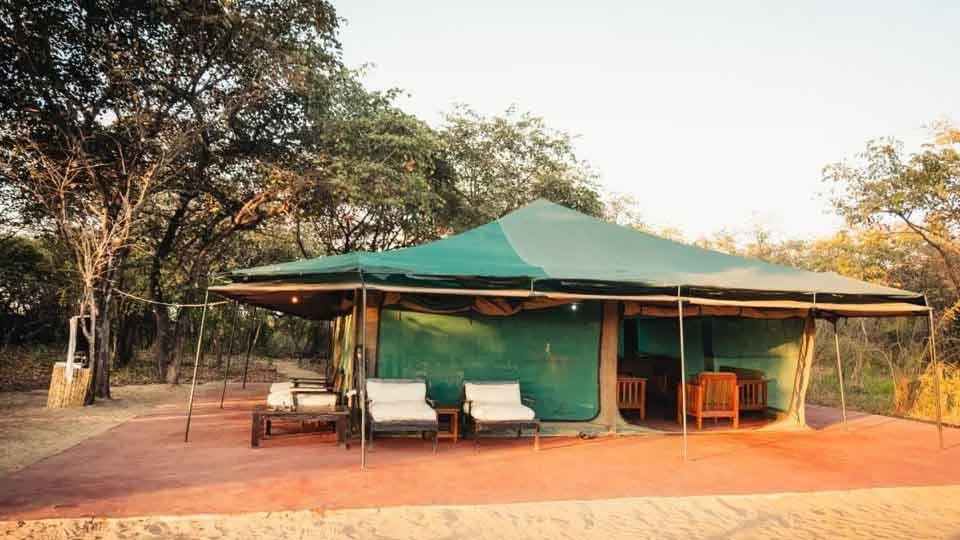
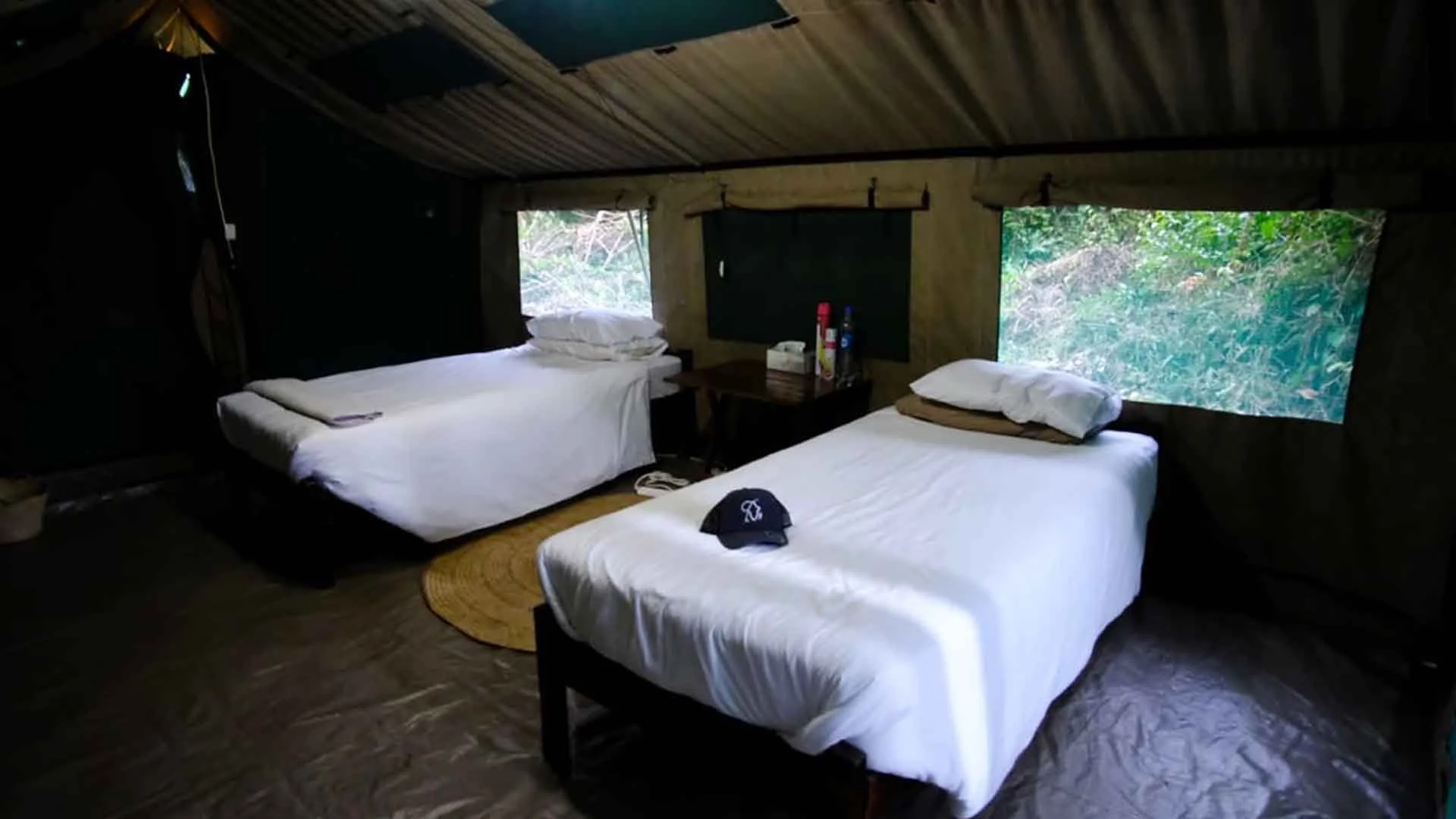
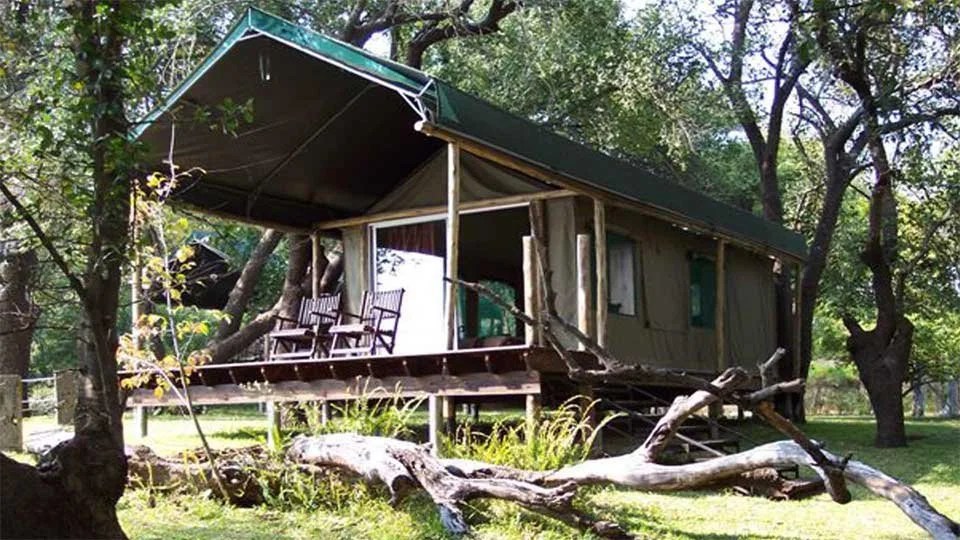
Dhala Camp offers safari-style riverside accommodation on the banks of the Mnyera River. Guests stay in en‑suite tents with twin or double beds and private river views. Each tent features a toilet and shower, while shared areas provide electric charging points for cameras and devices.
Samaki Camp – Ruhudji River
Samaki Camp is a rustic, off-grid bush camp on the Ruhudji River, offering a more secluded wilderness experience. Guests stay in traditional en‑suite safari tents with twin or double beds and simple, comfortable amenities.
-
Tigerfish Fishing Season – Mnyera & Ruhudji Rivers
The prime season for tigerfish fly fishing on Tanzania’s Mnyera and Ruhudji Rivers is during the dry season, when water levels are lower and more stable, and tigerfish are most active and aggressive.
Season: Early August through November – conditions are ideal for fly fishing, with clearer water, stable flows, and peak tigerfish activity.
The early season often offers higher water and larger trophy fish, while the later months provide more consistent action as water levels drop and fish concentrate.
Most operators and outfitters run safaris during this 12–16 week window, ensuring anglers have the best chance at landing trophy tigerfish.
-
2026 USD Rates:
Two anglers per boat:
7-nights and 6-days guided fishing
(Fishing is 5 full days and 2 half days)
$10,850 per person
+ $2,100 roundtrip domestic air charter = $12,950 p.p.
Non-Angler Companion:
$5,500 per person
+ $2,100 roundtrip domestic air charter = $7,600.00 p.p. -
Fly Rods
8‑ to 10‑weight rods are ideal; 9‑weight rods are most commonly recommended.
Provide the strength to cast large streamer flies and control powerful, fast-fighting tigerfish.
Medium-to-fast action helps with hooksets and turnover of bulky flies in current and deep water.
Reels
Match reel to rod weight (typically 9–10 weight reels).
Look for smooth, reliable drag and large arbor to handle sudden, strong runs.
Should hold 100–350 m of 30 lb backing to pair effectively with your fly line.
Fly Lines
Fast-sinking or sink-tip lines for deep runs and strong currents.
Floating or intermediate lines for surface and subsurface presentations.
Leader Recommendations
Length: 2–3 m (6–10 ft) of straight monofilament or fluorocarbon.
Strength: 20–40 lb test, depending on conditions and target fish size. Fluorocarbon sinks well, while mono provides extra shock absorption.
Optional: Some anglers prefer a slightly longer leader (up to 10 ft) for deep runs or when using larger flies.
Wire Bite Trace
Use a 6–12 inch (15–30 cm) wire section to protect against tigerfish teeth.
25–40 lb knottable wire (stainless steel or specialized tiger wire) is recommended, allowing direct attachment to the leader without crimps.
Knottable wire is preferred over rigid piano wire because it offers more natural fly movement and easier connection to leaders or flies.
Connection Tips
Attach the fly to the wire trace with a perfection loop, Rapala loop, or other loop knot to allow the fly to move freely while protecting the tippet.
-
A maximum of 8 anglers per week, divided into two groups of four. One group begins at Dhala Camp on the Mnyera River, while the other starts at Samaki Camp on the Ruhudji River, with groups rotating mid-week to fish both rivers.
-
Custom-built 18 ft aluminum boats, specifically designed for the Mnyera and Ruhudji Rivers. Powered by 15–25 hp outboard motors, these shallow-draft boats provide the maneuverability and control needed to drift the rivers and navigate around snags and structure safely.
-
Traveling to Tanzania & Getting to Camp
Entry Requirements:
U.S. passport holders need an eTA (Electronic Travel Authorization) to enter Tanzania.
Getting to the Camp:
Fly to Dar es Salaam – Tanzania’s largest city. An African Waters staff member will meet you at the airport and drive you to The Seacliff Hotel for your overnight stay (hotel night not included in the package).
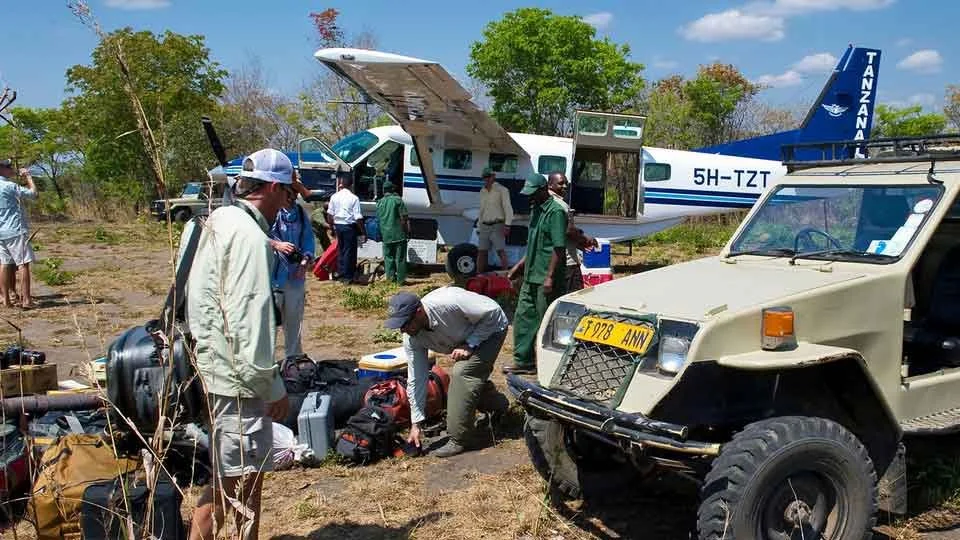
Charter Flight to Dhala Camp – The next morning, at 7:30 a.m., a representative will meet you at the hotel and transfer you to your charter flight. You’ll fly 1 hour 45 minutes in a Cessna Caravan to Dhala Camp. Luggage limits: 20 kg (44 lb) checked, 5 kg (11 lb) carry-on. Charter flight not included in the package.
Final Transfer – From the landing strip, it’s a 15-minute jeep ride to the camp.
-
The Packages Include:
• Meet and greet at Dar es Salaam Airport
• Ground transfers between hotel and domestic airport
• 6-days guided fishing
• 7-nights at Camp
• All meals at camp
• Soft drinks and bottled water
• Three beers per person per day
• Two bottles of wine with dinner per party of four
• Fishing licenses
• Concession fees
• Tanzania Government Conservation Levy
• 16% Tanzania Tourism VAT.The Packages Do Not Include:
• Airfare
• International flight to Dar es Salaam, and return
• Charter flight between Dar es Salaam and Camp
($1,895 p.p. in 2025)
• Visa and entry fees upon arrival
• Meals, beverages, and first-night hotel stay in Dar es Salaam
• BYO liquor from duty-free
• Spirits and wine in camp
• Beer, $5 per can over the allocated amount in camp
• $100 rod and reel rental, optional and excludes fly lines
• Fishing tackle
• Gratuities for guides and staff
• $5 per minute for outgoing satellite calls
• $3 per minute for incoming satellite calls
• Mandatory medical evacuation insurance, such as Global Rescue
• Travel insurance
• Anything not listed under inclusions.
The Mnyera, Ruhudji Rivers and Surrounding Wilderness
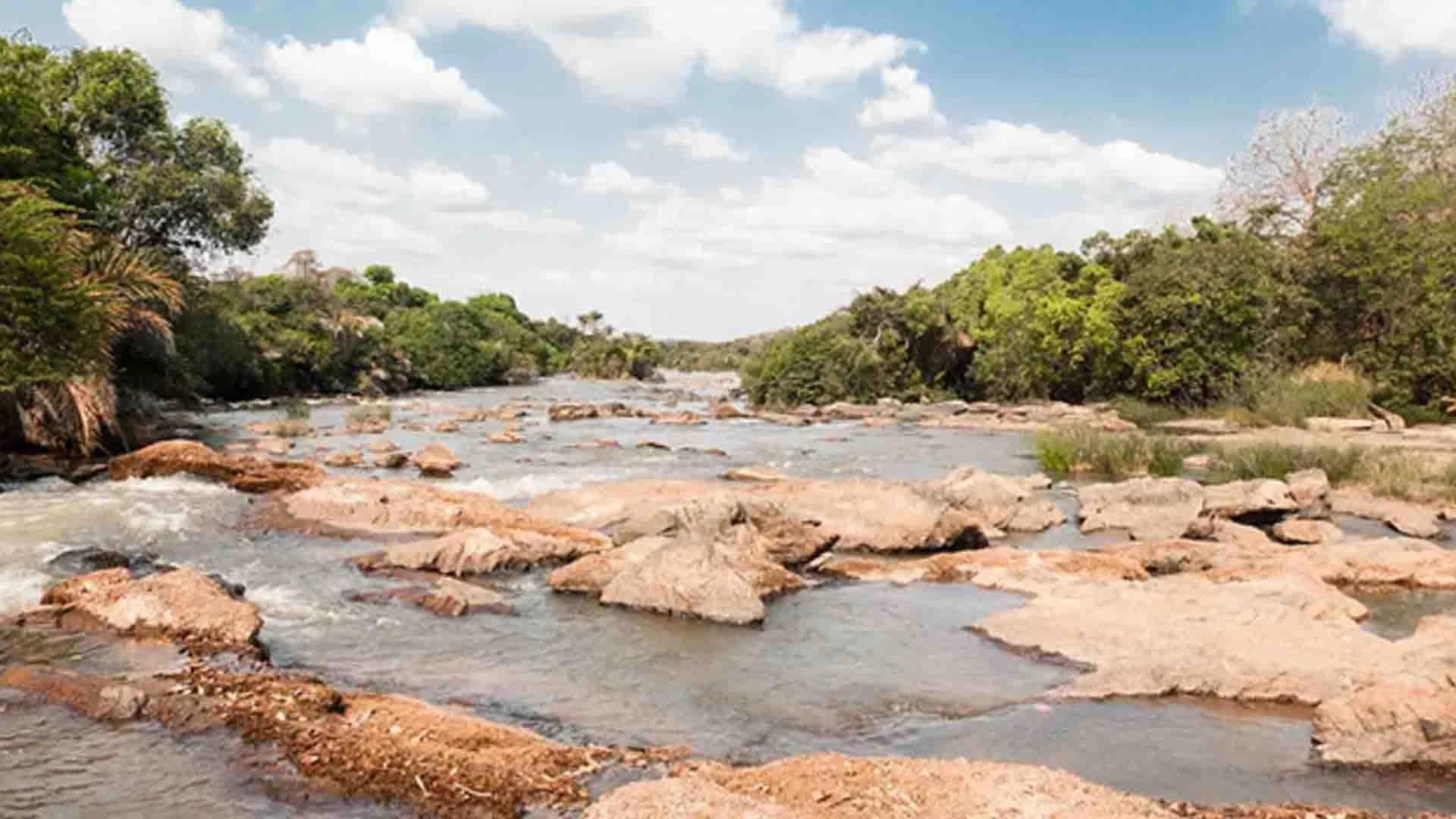
The Mnyera River is a meandering river in southwest Tanzania that flows through remote, untouched wilderness. Its clear waters wind through a variety of habitats, including shallow flats, deep channels, and broad pools, interspersed with rapids and submerged timber. The river is bordered by dense forests and open floodplains, creating a rich mosaic of ecosystems that support diverse wildlife and plant life. Its natural curves and contrasting habitats make it a striking feature of the Tanzanian landscape.
The Ruhudji River is slightly smaller and more secluded than the Mnyera, offering a peaceful, pristine environment. The river flows past sandbanks, rocky outcrops, and fallen trees, with quiet stretches that feel untouched by humans. Its banks are fringed by savannah woodland and gallery forest, home to a variety of wildlife. The Ruhudji provides a sense of true wilderness, where the rhythm of the river and surrounding bush dominates the landscape.
The rivers traverse one of the last remaining true African wilderness areas, largely untouched by modern development. The surrounding landscape is home to elephants, hippos, crocodiles, and a rich diversity of birdlife, offering an authentic safari experience where nature takes center stage.
Dhala Camp on the Mnyera and Samaki Camp on the Ruhudji are carefully situated to provide easy access to the rivers while fully immersing guests in the bush, all with minimal impact on the fragile ecosystem.
A Typical Day on the Tigerfishing Safari
5:30 a.m. – 6:00 a.m. – Wake up and enjoy breakfast at camp.
6:00 a.m. – 12:00 p.m. – Morning fishing session on the Mnyera or Ruhudji Rivers with your guide.
12:00 p.m. – 1:00 p.m. – Lunch riverside or at camp, featuring fresh, locally prepared meals.
1:00 p.m. – 3:30 p.m. – Rest, fly-tying, or optional fishing during the warmer midday hours.
3:30 p.m. – 6:00 p.m. – Afternoon fishing session, targeting tigerfish in prime late-day conditions.
6:00 p.m. – 7:00 p.m. – Sundowners and wildlife viewing, spotting hippos, elephants, and birds along the riverbanks.
7:00 p.m. – 8:30 p.m. – Dinner at camp, sharing stories and preparing for the next day.
8:30 p.m. onward – Relax under the stars, enjoy the sounds of the wilderness, and prepare gear for tomorrow.
About the Camps
Dhala Camp – Mnyera River
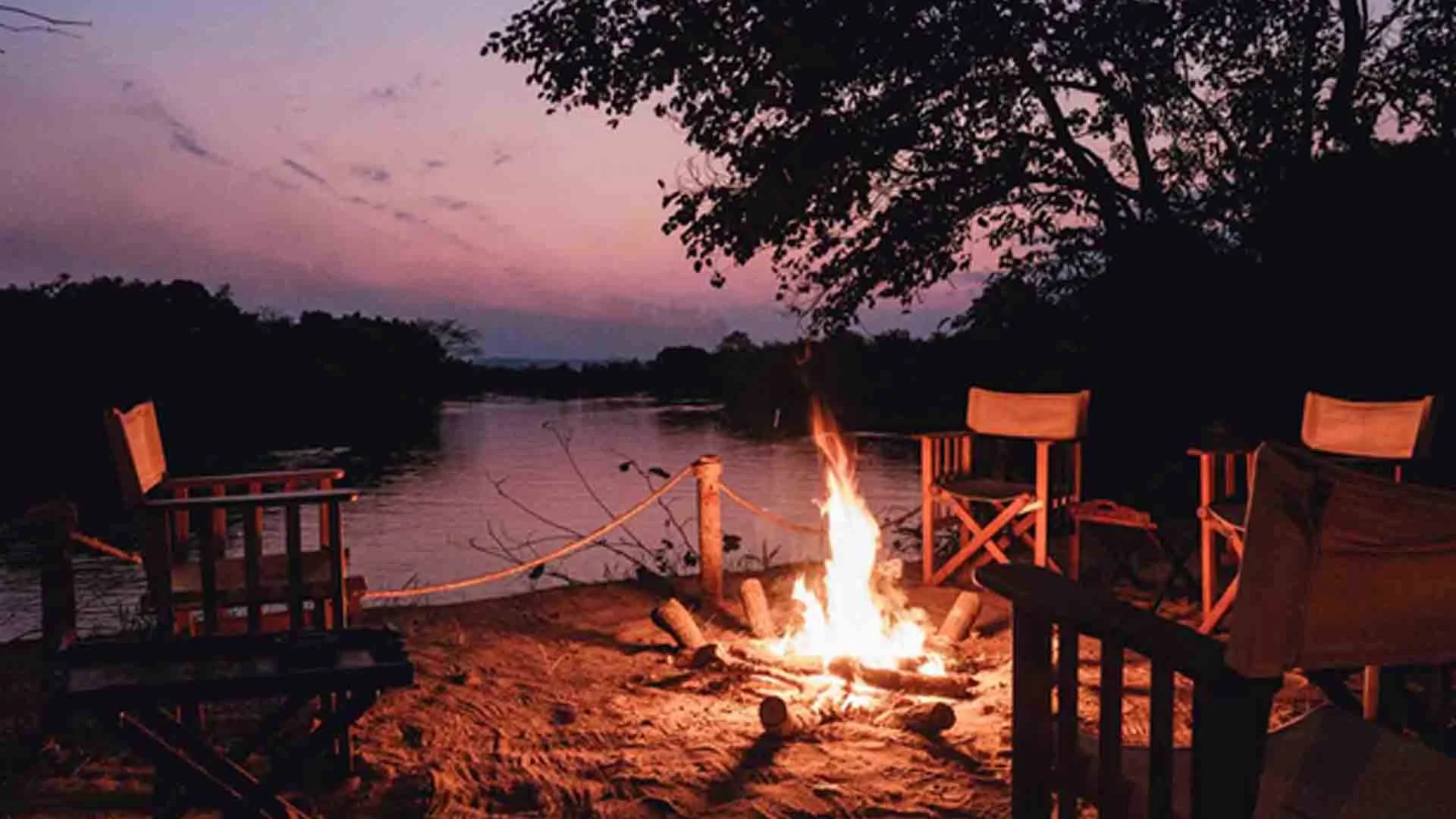
Dhala Camp sits riverside on the Mnyera River, offering comfortable safari-style accommodation and stunning views over the water. The camp features a thatched lounge and mess with a bar, small library, and a fly‑tying station. Meals are served riverside, and evenings are perfect for sundowners around the fire under the African sky.
Samaki Camp – Ruhudji River
Samaki Camp is a remote, off-grid bush camp on the Ruhudji River, providing a peaceful wilderness experience. Without mains electricity, guests enjoy quiet evenings, with hot meals served alfresco under the stars or in shaded forest areas, fully immersing anglers in the natural surroundings.